

Queen vs. Worker Ants: What's the Difference?
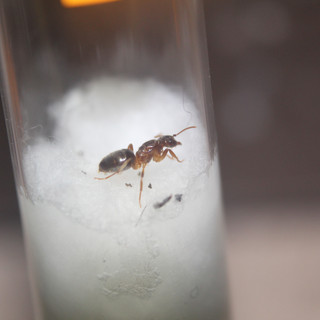

If you're into ant keeping, you've certainly heard about "queen ants" and "worker ants." They sound different, and they are. Knowing the difference between queen ants and worker ants will enable you to monitor your colony effectively, but also notice queen ants in the wild, if you ever stumble across one!
Size: The Most Obvious Difference
The easiest way to spot a queen is to look at size. Queens are noticeably larger than workers — though this is true for most ant species, not all. Some species have queens and workers that are much closer in size, so size alone isn't always a dead giveaway. That said, in many common species, a queen can be 2-3 times the length of a worker ant, and significantly bulkier. The thorax will often be larger and wider than in a worker.
That extra size matters. Queens have larger abdomens to house their reproductive organs, and their bodies are built to produce thousands or hundreds of thousands of eggs over many years. Workers, on the other hand, are built to collect food and do, well, work.
When you're buying a colony from Stateside Ants, you'll probably instantly notice that the queen is larger than the rest (with some very rare exceptions) of the colony. This is the most basic difference, but it's worth saying!
The Reproductive Difference: The Core Distinction
Here's the thing most people already know: the queen is the head of the colony. And yeah, everyone's heard that the queen is the one who keeps the colony going by reproducing. But here's what that actually means in practice.
Only the queen can reproduce. Every worker ant in a colony is female and mostly sterile. With some exceptions (some worker ants are able to lay infertile eggs, which will just turn into males until the colony dies), most worker ants will not lay eggs, especially when the queen is present in the colony. This isn't a choice or a punishment! It's just how the ants work.
The queen, on the other hand, is the only fertile female. After a nuptial flight (when young queens and males fly out to mate), a mated queen can lay thousands or even millions of eggs throughout her lifetime, depending on species. Some successful queens can live for 20+ years, continuously producing offspring.
This is why the queen matters so much. It sounds obvious when you say it. "The queen has babies". But that's the whole point! Without a queen, there are no new ants being born. Workers can maintain a small colony temporarily, but without new eggs being laid, the colony will gradually die out as workers age and are not replaced, coming to a sad end. The queen isn't just important. She's everything! This is why Stateside Ants isn't your average ant seller - we sell queens and queenright colonies ready to grow an empire, not workers destined to die out in a week!
Behavior: Workers vs. Queens
Beyond biology, queens and workers behave very differently.
Workers are the doers. They:
Forage for food and bring it back to the nest
Care for eggs, larvae, and pupae (baby ants)
Build and maintain the nest
Defend the colony from threats
Tend to the queen, keeping her egg-laying
Queens are typically sedentary after colony is established. They:
Spend most of their time in the deepest or coziest chambers of the nest
Focus almost entirely on laying eggs
Eat food brought to them by workers
Will not venture into areas on their own
The queens job is to lay eggs, the workers jobs are to care for the queen and pretty much do everything else.
In your captive setup, you'll typically see your queen in the darker, deeper parts of your tube or nest. Workers will be everywhere else, bustling around.
Why This Matters for Your Colony
This matters for your ants and antkeeping journey.
If you want your colony to grow, you need a queen. A queenless colony of workers can survive for a few weeks or, if you're lucky, months, but it won't expand. They won't lay eggs (because workers can't), and the colony will slowly, sadly decline.
If you're starting a new colony, you're buying a queen (or a queen with her beginning workers present). The queen is the foundation of everything. From day one, she'll begin laying eggs. Those eggs hatch into larvae, which develop into pupae, which emerge as new worker ants. A healthy queen in good conditions can lay hundreds of eggs per month. If you buy a queen from Stateside Ants, she is on her way to growing her first workers!
Lifespan Differences
Workers typically live anywhere from a few months to a few years, depending on the species and conditions. Having a queen around seems to extend their lifespan.
Queens live dramatically longer. Some queen ants live 20-30 years in captivity. This longevity means a single queen can sustain a colony for decades, continuously producing new generations of workers.
This long lifespan is another reason queens are so valuable. They're very interesting animals, not just a bug, bumbling around!
The Colony Structure Depends on These Roles
A healthy ant colony is built on having their queen present. The queen handles reproduction, and workers handle everything else. It's not a democracy. Everyone just does their jobs!
Without understanding the difference between queens and workers, you might wonder why your colony isn't growing, or why a "normal" ant by itself doesn't seem to do much. The answer is roles. Queens and workers are shaped to do very different jobs, and both are essential.
Practical Takeaway
When you're setting up your first colony with ants from Stateside Ants, you're getting a queen (and possibly some workers). The queen is doing the reproductive requirements. The workers, whether she is growing them when you receive her or already has grown them, will do the worker jobs!
Keep your queen in a healthy way. Queens like humid, cooler areas in many species, while the workers and some brood prefer warmer areas. Provide a gradient so the ants can choose these kinds of things!
Ready to start your colony? Browse our selection of healthy, mated queens at Stateside Ants. We specialize in queens that thrive, because we know a great queen is the foundation of a great colony.


Comments